
In today’s fast-paced world, organic products making healthier and more conscious choices has become increasingly important. One simple change you can make is to choose organic products for your everyday lifestyle.
From organic grains and pulses to spices, flours, snacks, and other grocery essentials, organic products are becoming a popular choice for people who want to make better decisions about what they consume. But what makes organic products different, and why should you consider adding them to your daily routine?
In this blog, we explore 10 benefits of choosing organic products for everyday life and how they can support a more mindful lifestyle.
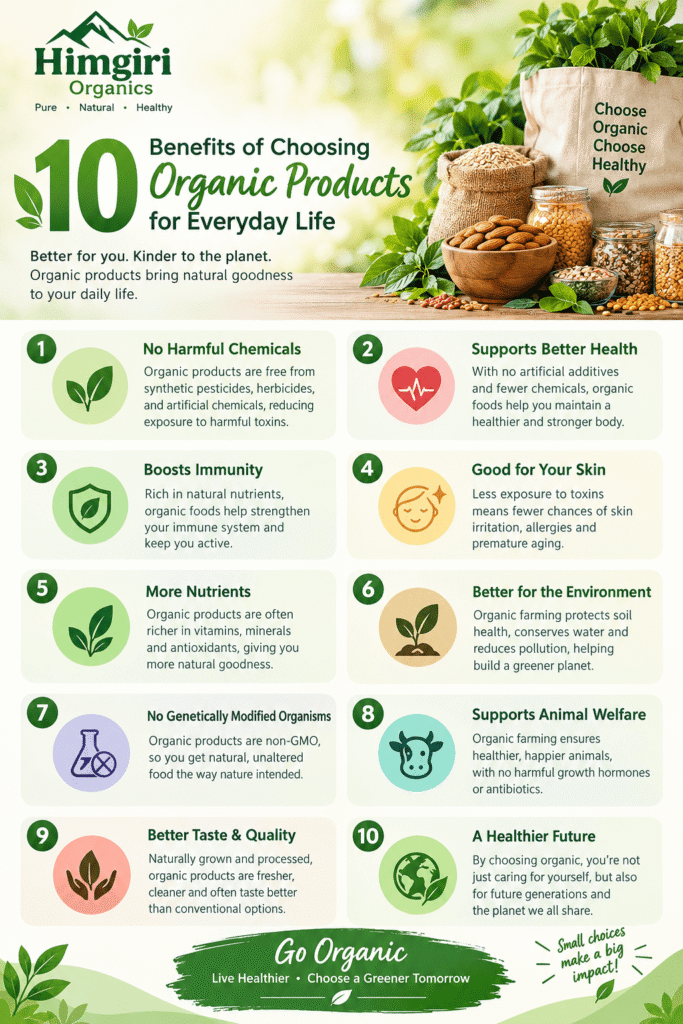
Helps You Choose Better-Quality Food
One of the main reasons people choose organic products is their focus on quality. Organic farming generally emphasizes natural farming practices and responsible cultivation methods.
Organic food products can be a great choice for people who want to pay closer attention to the quality and source of the food they bring into their homes.
Whether you are purchasing grains, pulses, spices, or other everyday essentials, checking the ingredients, sourcing, certifications, and product quality can help you make informed choices.
Supports a More Natural Lifestyle
Choosing organic products can be part of a lifestyle that focuses on more natural and minimally processed choices.
Many organic food items are produced using farming practices that reduce reliance on certain synthetic agricultural inputs. For consumers, choosing organic can be one way to become more conscious about where their food comes from and how it is produced.
From organic rice and pulses to whole spices and flours, there are many everyday products available in organic varieties.
Encourages Sustainable Farming Practices
Organic farming is generally associated with farming methods designed to work more naturally with the environment.
Responsible organic agriculture can focus on practices such as maintaining soil health, crop diversity, composting, and reducing dependence on certain synthetic inputs.
By choosing responsibly sourced organic products, consumers can support businesses and farmers working toward more sustainable food production.
Supports Soil Health
Healthy soil is an important foundation of agriculture. Organic farming practices can place greater emphasis on maintaining soil fertility through methods such as organic manure, composting, crop rotation, and other soil-management techniques.
Healthy soil supports healthy crops and can contribute to more sustainable agricultural systems over the long term.
This makes soil-conscious farming an important consideration when choosing food products.
Helps You Make More Conscious Food Choices
Choosing organic products encourages consumers to pay more attention to what they purchase.
Instead of simply selecting products based on price or packaging, you may start checking:
- Where the product comes from
- How it was produced
- The ingredient list
- Organic certifications
- Processing methods
- Brand transparency
- Packaging and sourcing information
This awareness can help you develop a more thoughtful approach to everyday grocery shopping.
Wide Variety of Everyday Organic Products
You do not have to completely change your lifestyle to start choosing organic products.
Today, many everyday grocery categories are available in organic options, including:
- Organic grains
- Organic pulses and dals
- Organic whole spices
- Organic flour
- Organic dry fruits
- Organic seeds
- Organic snacks
- Organic cooking essentials
You can start with products you already use regularly and gradually introduce more organic options into your kitchen.
Can Support Local Farmers and Responsible Producers
Choosing organic products from responsible suppliers can help support farmers and producers who follow organic or sustainable agricultural practices.
When consumers create demand for responsibly produced food, it can encourage more businesses to invest in better sourcing and farming practices.
For this reason, choosing organic can be about more than what is on your plate—it can also be about supporting a more responsible food supply chain.
Encourages a Health-Conscious Lifestyle
Organic products are often chosen by people who are trying to build healthier and more mindful everyday habits.
However, it is important to remember that organic does not automatically mean more nutritious or calorie-free. A healthy lifestyle also depends on having a balanced diet, appropriate portions, regular physical activity, and overall food quality.
The benefit of choosing organic products is that they can fit naturally into a broader approach to conscious eating.
9. Promotes Responsible Consumption
Modern consumers are increasingly interested in understanding the environmental and social impact of their purchases.
Choosing organic products can encourage you to think beyond the product itself and consider:
- Farming methods
- Product sourcing
- Packaging
- Food waste
- Sustainability
- Responsible production
Small purchasing decisions, when made consistently, can become part of a more responsible consumption pattern.
10. Makes Everyday Shopping More Meaningful
Perhaps the biggest benefit is simply becoming more aware of your everyday choices.
The food you purchase regularly—rice, dal, flour, spices, grains, and other staples—makes up a significant part of your household consumption. Choosing products carefully can help you create a kitchen that reflects your preferences for quality, transparency, and responsible sourcing.
At Himgiri Organics, our goal is to make it easier for consumers to discover quality organic and natural food products for their everyday needs.
How to Start Choosing Organic Products
If you are new to organic shopping, you do not need to replace everything at once. Start with a few products that you regularly consume.
For example, you can begin with:
- Organic rice or other grains
- Organic dals and pulses
- Organic whole spices
- Organic flour
- Organic seeds and dry fruits
Always check the product label and look for relevant organic certification or verification where applicable. Compare ingredients, sourcing information, packaging, and product quality before purchasing.
Final Thoughts
Choosing organic products can be a simple way to become more conscious about the food you consume and the products you bring into your home.
From supporting responsible farming practices and encouraging soil-conscious agriculture to helping consumers become more aware of food quality and sourcing, organic choices can play a meaningful role in a mindful lifestyle.
You don’t have to make every change overnight. Start small, learn about the products you buy, and gradually make choices that align with your lifestyle and values.
Explore quality organic products with Himgiri Organics and make every everyday choice a more conscious one.
Frequently Asked Questions (FAQs)
1. What are organic products?
Organic products are products produced according to defined organic farming and processing standards. Depending on the product and country, organic certification indicates compliance with specific requirements related to production, processing, and handling.
2. Are organic products better for everyday use?
Organic products can be a good option for people who prefer organic farming practices and want to make more conscious purchasing decisions. However, product quality and nutritional value should always be considered individually.
3. What are the main benefits of organic products?
Some commonly associated benefits include supporting responsible farming practices, encouraging soil health, promoting conscious consumption, and helping consumers pay greater attention to sourcing and production methods.
4. Which organic products can I use every day?
You can find organic options across many grocery categories, including rice, grains, pulses, dals, flour, spices, seeds, dry fruits, and other food products.